Generate Drunkard’s Walk Cells
Generates an organic pattern of grid cells using the Drunkard’s Walk algorithm.
This is a classic procedural generation technique where one or more “walkers” move step-by-step through a grid, marking cells as they go.
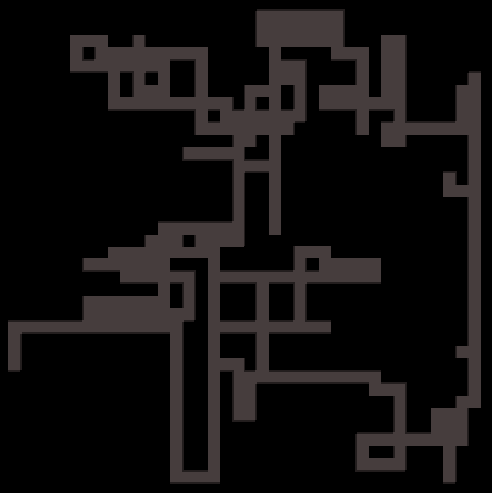
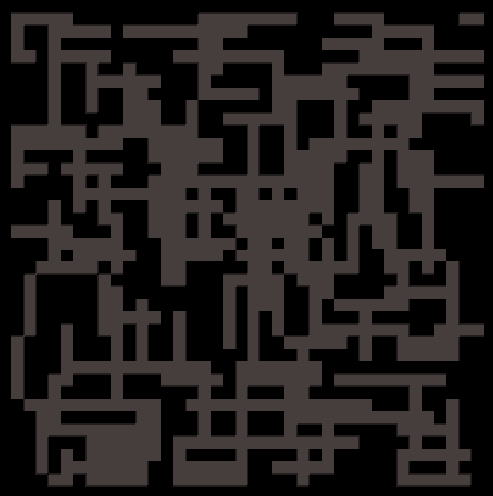
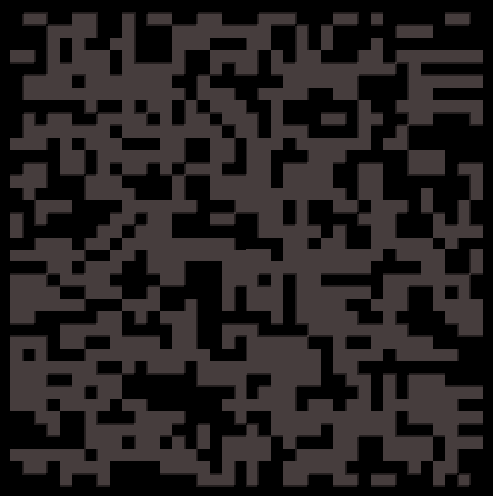
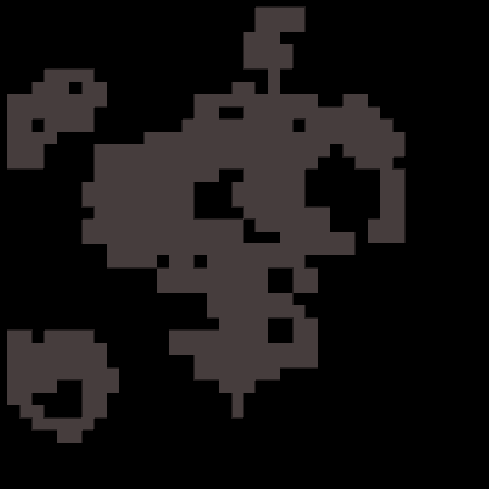
The result can range from winding tunnels to blobby cave systems or isolated pockets - depending on the settings:
| Walkers: 5 Steps: 100 Forward: 0.7 |
 |
Walkers: 200 Steps: 4 Forward: 1.0 |
 |
| Walkers: 600 Steps: 600 Forward: 0.7 |
 |
Walkers: 5 Steps: 100 Forward: 0 |
 |
What it does
The algorithm starts with one or more walkers inside a bounded region.
Each walker randomly steps in one of the four cardinal directions, marking each cell it visits as selected (e.g., floor, grass, water).
- A higher Forward Bias makes walkers continue straight more often, forming tunnels or paths.
- A lower Forward Bias causes frequent turns, forming pockets or caves.
- With more walkers and steps, the result can fill much of the region, forming complex networks of connected areas.
The output is a list of Vector2Int positions representing the selected cells - how you interpret or paint them is up to you.
Inputs
| Field | Description |
|---|---|
| Bounds | The BoundsInt region the walkers can move within. All selected cells will be inside this area. |
| Walker Count | Number of walkers to spawn. More walkers create more regions or branches. |
| Max Steps | Total number of steps shared by all walkers. Higher values expand the generated area. |
| Forward Bias | Chance to continue straight instead of turning. Low = twisty, blobby shapes; high = straighter paths or tunnels. |
| Target Fill % | Stop early once this fraction of the area is selected. ≤ 0 ignores this and just uses Max Steps. |
Outputs
| Field | Description |
|---|---|
| Cells | The set of selected Vector2Int grid positions. You can interpret these as any type of feature - floors, water, grass, or paths. |
| Fill Percent | Fraction of the Bounds that ended up selected (0–1). |
| Used Bounds | The BoundsInt region actually used during generation (usually matches input Bounds). |
How it works
- Initializes the Drunkard’s Walk simulation within the input Bounds.
- Spawns Walker Count agents at random starting points.
-
For each step (up to Max Steps):
-
Mark the current grid cell as selected.
- Continue in the same direction or pick a new random direction based on Forward Bias.
- Clamp movement to stay inside Bounds.
- If Target Fill % > 0 and reached, stop early.
- Returns all selected cells and final fill statistics.
This simple algorithm can generate a surprising variety of organic shapes:
- A single walker with high Forward Bias → winding paths.
- Multiple walkers with moderate Forward Bias → interconnected tunnel networks.
- Low Forward Bias and many steps → wide caverns or lakes.
Determinism: Uses UnityEngine.Random. To reproduce results, set a seed with Random → Random Init State before running this action.
Tips & pitfalls
- Tune for shape:
- Low Forward Bias = scattered or rounded blobs.
- High Forward Bias = long, continuous tunnels.
- Walker Count adds complexity and branching - use multiple for more natural, interconnected patterns.
- Target Fill % can prevent overfilling when generating compact pockets.
- Interpretation is flexible: Use the same algorithm for caves, paths, grass clearings, rivers, or lakes - just change how you paint or fill the output cells.
- Post-processing: You can smooth results by eroding, expanding, or connecting nearby clusters.